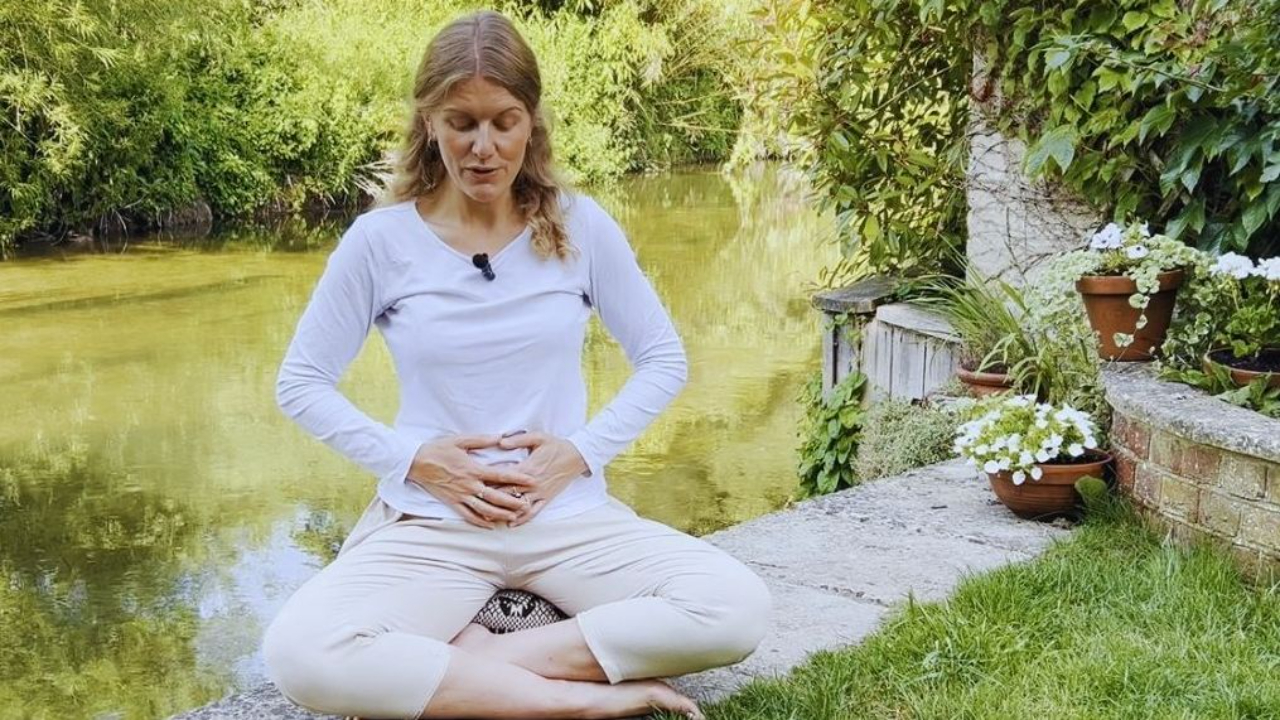
Somatic self holds: practices to support an overwhelmed nervous system
When we are feeling anxious, overwhelmed, shut down, or emotionally flooded, the body is often not looking for analysing or fixing. It is looking for containment.
Supportive self holds are a simple somatic practice that use gentle, intentional touch to help the nervous system feel steadier and more supported. This kind of touch, which mimics an infant being held by a caregiver, can communicate safety to the body in a way words often cannot.
This is not a technique to force calm or make feelings disappear. It is a way of meeting your body where it is and offering it a sense of safety through being held.
Table of contents
What are supportive self holds?
Supportive self holds involve placing your hands on your body in ways that feel grounding, soothing, or containing. They can be especially helpful during moments of:
- stress or anxiety
- emotional overwhelm
- numbness or shutdown
- fatigue or low energy
- feeling untethered or unsafe in your body
You can practise self holds seated, standing, or lying down, and for as long or as little time as feels right for you.
A gentle practice: supportive self holds
You do not need to do all of these. You might choose just one, or let your body guide you.
Some supportive holds to explore
I have taken screenshots from the Supportive self holds practice video inside Somatic Self Healing to show you these holds and give you a glimpse of what is inside the programme. Somatic Self Healing includes approximately 75 guided audio and video practices to support nervous system regulation in a gentle, trauma-informed way.

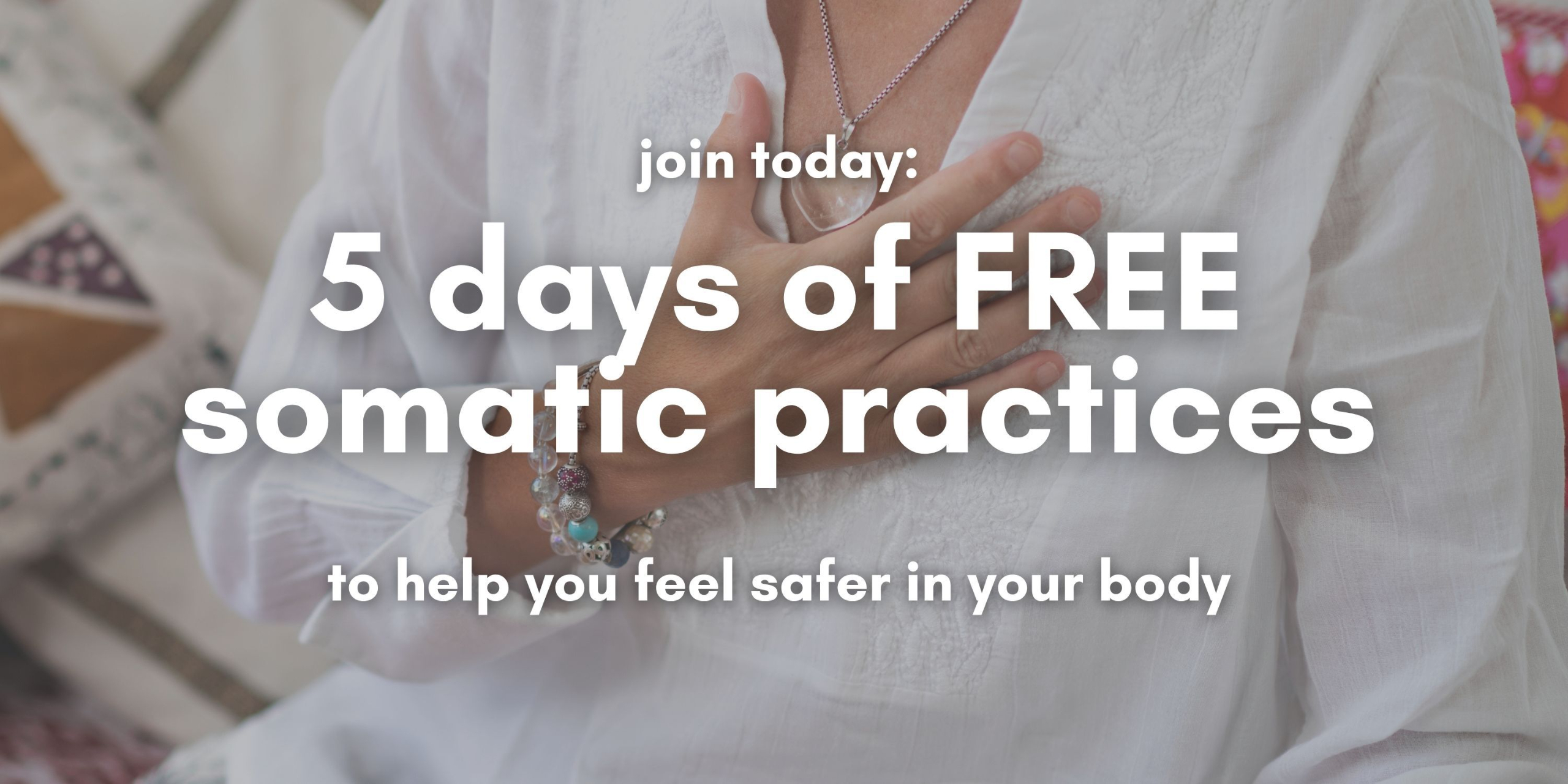
Hands on the heart
Place one or both hands over your heart centre. Let the weight of your hands offer steadiness and a sense of being held.
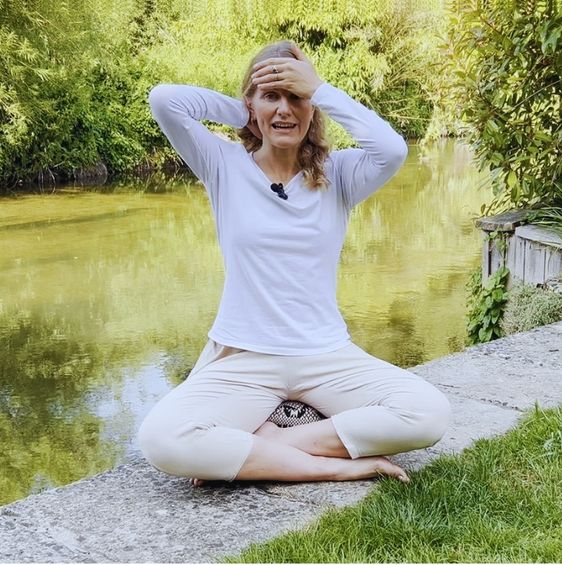
Forehead and base of skull
Rest one hand on your forehead and the other at the base of your skull. This can feel supportive when thoughts are racing or you feel mentally overloaded.

Armpit and shoulder hold
Place one hand under the opposite armpit and the other on the shoulder. This can feel containing and reassuring when you feel untethered or uneasy.

Hands on the belly
Rest your hands on your belly and feel the warmth and contact. This can support grounding and a sense of internal steadiness.

Crossed arms around the torso
Cross your arms and let your hands rest on your upper arms or ribs. This is a simple containing hold that can feel supportive during overwhelm.

Knees gently towards the chest
If it feels supportive, draw your knees in slightly and let your hands rest where comfortable. This can offer containment when you feel tender or depleted.
Once you have found a hold that feels okay, allow yourself to stay there. There is no need to breathe in a particular way or change anything. Simply notice what it is like to be held in this way.
What you might notice
Everyone’s nervous system responds differently. You might notice:
- your breath slowing or deepening
- muscles softening
- a sense of warmth or grounding
- emotions moving, settling, or becoming clearer
- or you may notice very little at all
All of these responses are valid. There is no “right” experience.
Moving slowly and listening to your body
If at any point a self hold does not feel supportive, you can change it or stop altogether. Somatic work is about choice, pacing, and consent, especially with touch.
You might find that different holds feel helpful on different days. Trust your body’s signals.
A closing note
Supportive self holds can be a simple way to offer yourself containment when your system feels overwhelmed, activated, or tired. Over time, practices like this can help the nervous system learn that it is safe enough to soften.