Why you get morning anxiety (& what do do about it)
Contents
- The physiology of morning anxiety
- Cortisol Awakening Response explained
- Why some nervous systems are more sensitive
- Common triggers for morning anxiety
- Somatic tools to start the day well
- Supporting your system before bed
- How Somatic Self Healing supports morning nervous-system repatterning
- Closing thoughts
- References
For many people, the most anxious part of the day is not a difficult meeting or an unexpected email. It is the moment they wake up.
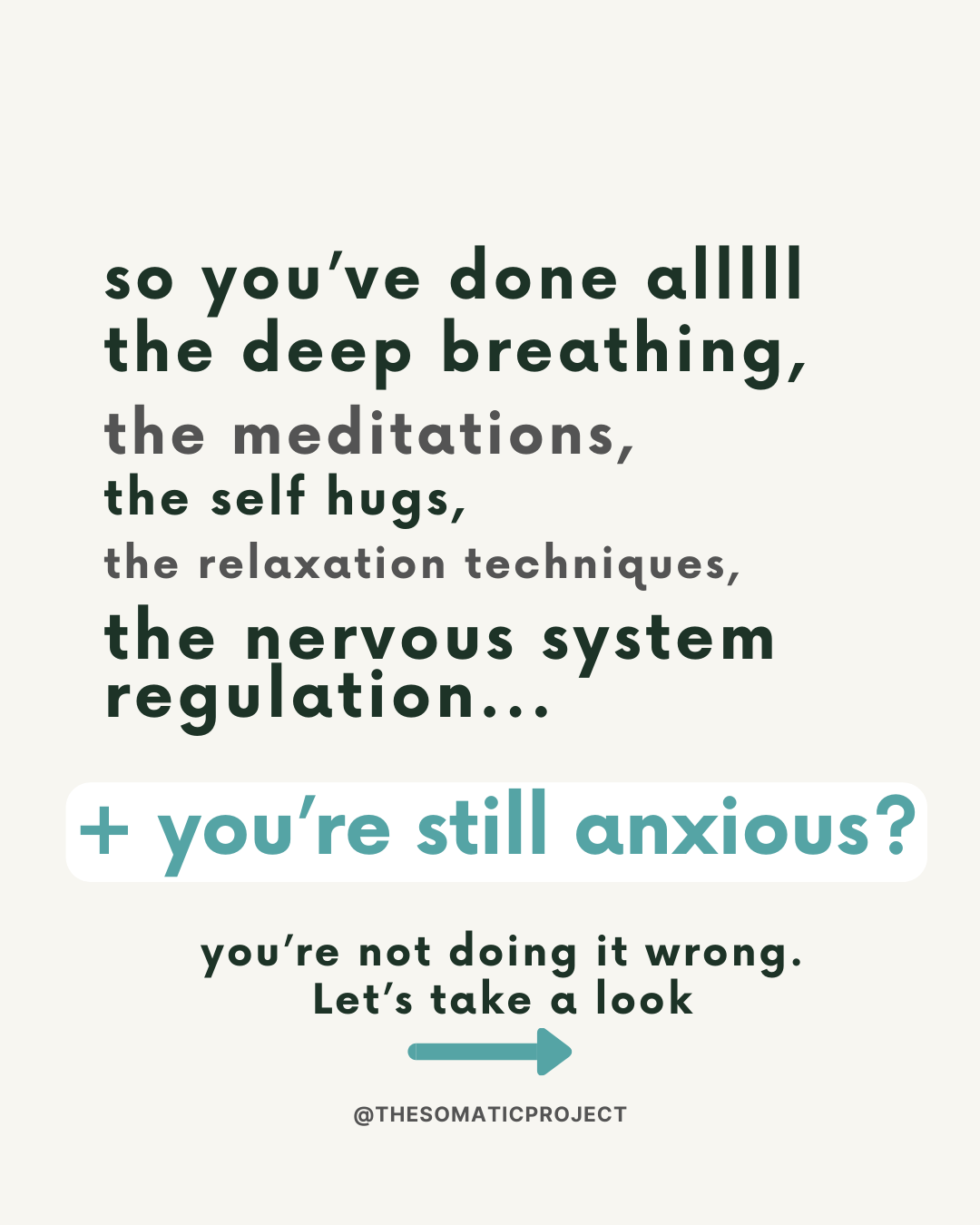
You open your eyes and your mind is already racing. Your chest feels tight, your stomach is unsettled, and before you have even stepped out of bed, it can feel as if you are already “behind” or braced for something to go wrong.
If this is familiar, you are not alone. Morning anxiety is a very common experience, especially for nervous systems that have been living with chronic stress, trauma or overwhelm (Maté, 2003; van der Kolk, 2015).
From a somatic perspective, this is not a personal failing or a mindset problem. It is a reflection of how your body and nervous system are trying to protect you.
The physiology of morning anxiety
Anxiety in the morning is often tied to natural biological rhythms. During the night, your nervous system cycles through periods of deeper rest and lighter activation. As morning approaches, your system prepares you to wake up, mobilise and meet the day.
For some people, this “gearing up” process feels smooth. For others, particularly those with sensitised or trauma-affected nervous systems, this mobilisation can feel like sudden, intense anxiety: racing heart, tight chest, shallow breath, catastrophic thoughts or a sense of dread (Levine, 1997; van der Kolk, 2015).
Instead of gently rising into readiness, the body snaps into a protective state.
Understanding how the nervous system and hormones work together in the early hours can help this feel less mysterious and more workable.

Cortisol Awakening Response explained
Cortisol is a hormone that helps regulate your energy, blood sugar and stress response. It is often called a “stress hormone”, but it is also a waking up hormone. We need cortisol to get out of bed and engage with life.
In most people, cortisol naturally rises in the early morning in what is known as the Cortisol Awakening Response (CAR). This rise helps you feel more alert and ready for the day (Fries, Dettenborn and Kirschbaum, 2009).
When your system has experienced chronic stress, burnout or trauma, this awakening response can become exaggerated or dysregulated. Instead of a smooth rise, your body may experience a spike that feels more like a stress alarm than a gentle nudge.
This can show up as:
- Waking with a racing heart or tight chest
- Feeling “on edge” before anything has happened
- Strong anticipatory fear about the day ahead
- A sense that something is wrong, even if you cannot name it
What you experience as “morning anxiety” may actually be your nervous system and endocrine system working together in a way that has become overly geared toward protection.
Why some nervous systems are more sensitive
Not everyone experiences morning anxiety in the same way. Some nervous systems are more sensitive to change, novelty and demand.
Factors that can contribute to a more sensitive morning response include:
- History of trauma or chronic stress – the nervous system may be primed to scan for danger, especially at transitions like waking (Porges, 2011; Dana, 2018).
- Current life load – caregiving, demanding work, financial stress, health challenges or relational strain all add to baseline activation (Maté, 2003).
- Sleep quality – disrupted or shallow sleep can leave the system more reactive.
- Perfectionism or high self-expectations – the body may anticipate criticism, failure or “not enoughness”.
- Sensitivity and temperament – some people are more finely tuned to internal and external cues.
When you understand that your morning experience is shaped by your body’s history, context and biology, it becomes easier to meet yourself with compassion rather than blame.

Common triggers for morning anxiety
Morning anxiety does not arise in a vacuum. Often, there are patterns and triggers that quietly shape how your body feels when you wake up.
Common contributors include:
- Unresolved stress from the previous day – arguments, unfinished tasks, looming deadlines.
- Phone and screen use late at night – blue light and stimulating content can affect sleep and nervous-system settling.
- Caffeine, alcohol or blood-sugar fluctuations – these can impact sleep quality and morning stability.
- Loneliness or relational tension – waking into an environment that does not feel emotionally safe.
- Negative anticipation – worrying about what might go wrong today.
From a somatic perspective, your body is trying to prepare you to survive the day based on what it has learned from past days. It reacts before you consciously think about it.
Somatic tools to start the day well
Somatic tools work with your body and nervous system rather than against them. The aim is not to force calm, but to give your system a gentler landing as you wake up.
Here are a few simple practices you can experiment with:
Pause before you reach for your phone
Give your nervous system a few minutes to orient to the room before inviting in external stimuli. Notice the light, sounds and the contact of your body with the bed. Let yourself arrive.
Soft exhale breathing
Try inhaling through your nose for a count of 4 and exhaling for a count of 6–8. A slightly longer exhale can support parasympathetic activation and settling (Brown and Gerbarg, 2005).
Gentle orienting
Slowly let your eyes move around the room, taking in colours, shapes and safe details. This helps your system register “I am here, and I am safe enough right now” (Dana, 2018).
Grounding through touch
Place a hand on your chest or belly and feel the warmth and pressure. You might add a simple phrase such as “I am here with you” or “We are going slowly.” This pairs somatic sensation with a regulating tone.
Micro-movement
Instead of jumping out of bed, experiment with small, slow movements: rolling your shoulders, stretching your spine, circling your ankles. These micro-mobilisations help your body discharge some of the overnight activation in a gentle way (Levine, 1997).
Gentle shaking
For some people, morning anxiety can also be a sign of excess survival energy still held in the body from previous days or nights. Gentle shaking is a simple way to invite this energy to move. You might stand beside your bed and softly shake through your legs, hips, arms and shoulders, keeping your jaw loose and your breath easy. Think of it as giving your nervous system a safe channel to discharge some of that stored activation, so you can meet the day feeling a little less braced and a little more grounded.
Supporting your system before bed
Morning anxiety often begins the night before. What you do in the hours leading up to sleep can have a powerful effect on how your nervous system feels when you wake.
Supportive options include:
- Creating a simple wind-down ritual – dim lights, put screens aside where possible, and give your body clear signals that it is safe to rest.
- Gentle evening breathwork or somatic practice – a few minutes of slow breathing, stretching or a short somatic yoga practice can help shift you toward regulation.
- Externalising worries – writing down to-dos or concerns on paper so your mind and body are not holding them all night.
- Inviting co-regulation – connecting with someone safe, a pet, or a comforting sensory object (a warm blanket, a familiar scent).
Small, consistent adjustments can help your system feel less as if it is waking into an emergency each morning.

How Somatic Self Healing supports morning nervous-system repatterning
Morning anxiety is not something you simply “think away.” It is a pattern woven through your nervous system, hormones, history and current life context.
In Somatic Self Healing, we work with this gently and systematically by:
- Educating your nervous system – helping you understand why your mornings feel the way they do, from a trauma-informed, body-based perspective (Porges, 2011; Dana, 2018).
- Building regulation skills – offering breath, movement and awareness practices you can weave into your wake-up and wind-down routines.
- Processing survival energy – supporting your system to complete and soften underlying activation, rather than just managing symptoms on the surface (Levine, 1997; Payne, Levine and Crane-Godreau, 2015).
- Integrating younger or protective parts – meeting the parts of you that wake scared, pressured or already “behind” with compassion and somatic care (Fisher, 2017; Schwartz, 1995).
Over time, this kind of body-first work can help your mornings feel less like a fight and more like a beginning.
Closing thoughts
If you wake up anxious, it does not mean you are broken or failing at self-care. It means your body has learned to prepare for the day by mobilising early and strongly.
By understanding the physiology behind morning anxiety and working with somatic tools, you can begin to change your relationship with those first moments of the day.
Healing does not require you to wake up perfectly calm. It invites you to wake up in relationship with your body. To notice what is happening, offer support and gently teach your system that it is safe enough to meet this day.
Do your mornings feel hard before the day has even begun?
Somatic Self Healing is a self-paced, trauma-informed programme that helps you gently repattern your nervous system, build safety in your body and create more grounded mornings from the inside out.
Explore Somatic Self HealingReferences
Brown, R. P. and Gerbarg, P. L. (2005) ‘Sudarshan Kriya yogic breathing in the treatment of stress, anxiety, and depression: Part I neurophysiologic model’, Journal of Alternative and Complementary Medicine, 11(1), pp. 189–201.
Dana, D. (2018) The Polyvagal Theory in Therapy: Engaging the Rhythm of Regulation. New York: W. W. Norton.
Fisher, J. (2017) Healing the Fragmented Selves of Trauma Survivors: Overcoming Internal Self-Alienation. New York: Routledge.
Fries, E., Dettenborn, L. and Kirschbaum, C. (2009) ‘The cortisol awakening response (CAR): Facts and future directions’, International Journal of Psychophysiology, 72(1), pp. 67–73.
Levine, P. A. (1997) Waking the Tiger: Healing Trauma. Berkeley, CA: North Atlantic Books.
Maté, G. (2003) When the Body Says No: The Cost of Hidden Stress. Toronto: Vintage Canada.
Porges, S. W. (2011) The Polyvagal Theory: Neurophysiological Foundations of Emotions, Attachment, Communication, and Self-Regulation. New York: W. W. Norton.
Schwartz, R. C. (1995) Internal Family Systems Therapy. New York: Guilford Press.
van der Kolk, B. A. (2015) The Body Keeps the Score: Mind, Brain and Body in the Transformation of Trauma. New York: Viking.