Festive Survival Guide 2: Parts work + self compassion when family dynamics activate old patterns
As we move through December, many of us notice that our minds and bodies feel & act feel different around family. You might arrive at a gathering feeling fairly steady, then suddenly feel younger, smaller or more on edge than you expected. Old patterns might resurface. Old stories come back online. Your body might react as if you are back in an earlier version of yourself....
This article is the second in a three-part Festive Survival Guide, designed to help you stay grounded and compassionate with yourself during a season that can otherwise feel overwhelming.
In this series we explore:
- Part 1: supporting your nervous system through festive food, alcohol and routine changes
- Part 2: Parts work and self compassion for when family dynamics activate old patterns
- Part 3: Somatic boundaries for managing festive overwhelm
In Part 1 we looked at the physiological side of the season and how food, alcohol, sleep and routine changes can impact your nervous system. Here in Part 2, we turn towards the relational side. We will explore why family dynamics can feel so activating, how younger parts of you come online at Christmas, and how to use somatic parts work and self compassion to support yourself when this happens.
My intention is not to help you have a perfect, conflict free holiday, but to support you in staying in relationship with yourself - especially when old patterns flare up.
Contents
- Why family dynamics can feel so activating
- How younger parts come online around Christmas
- Freeze, fawn and old survival strategies in families
- A somatic self compassion break for family-triggered activation
- Gentle questions to meet your younger parts
- Simple regulation supports before, during and after family time
- How Somatic Self Healing can support you during the festive season
- Wrapping it up: befriending the parts that show up at Christmas
- References
Why family dynamics can feel so activating
On paper, a family gathering might not look particularly threatening. There is food, conversation, shared history and perhaps some familiar traditions. Yet inside, your body might feel tight, braced or strangely young. You might notice yourself anticipating criticism, waiting for tension or monitoring the emotional weather in the room.
From a somatic and trauma-informed lens, this makes sense. Your nervous system is not just responding to what is happening now. It is responding to a whole archive of remembered experiences, sensations and patterns from the past. Trauma expert Janina Fisher calls this 'implicit memory'. I like to use the term "feeling memory" - as they are memories we experience as feelings, rather than thoughts, as the way the body unconsciously remembers what felt threatening in the past and actives the same survival responses that kept us feeling safer then.
Family environments often carry a high density of cues for our bodies to interpret. A raised eyebrow, a comment about your life choices, a certain way of clearing plates or a familiar silence at the table can all act as signals. Even if nothing overtly harmful is happening, your body might be reading the situation through a historic, younger lens.
If you notice yourself feeling more reactive, emotional or shut down around family, it's not because there is anything wrong with you. It's because your nervous system is tracking old information as well as new and responding to your environment in the way it learned to keep you safe.

How younger parts come online around Christmas
In Somatic Self Healing, we talk about younger parts and protective parts. You might think of them as different versions of you that formed at different ages in response to what was happening around you (Schwartz, 1995; Fisher, 2017).
These parts often developed understandable strategies to manage difficult dynamics. For example:
- a high achieving part that tried to earn approval by doing everything “right”
- a peacemaker part that soothed everyone else to avoid conflict
- a quiet part that stayed small and invisible to stay safe
- a caretaker part that took on adult roles very early
- a funny part that used humour to defuse tension
These parts do not just hold stories, they hold feeling memories. The nervous system remembers tone of voice, posture, facial expression and the feeling of walking into certain rooms or being with certain people. This is why a simple holiday tradition can suddenly make your throat tight or your shoulders tense, even if you cannot quite explain why.
At Christmas, younger parts often come online more strongly because so many of the original conditions are present at once: the same house, the same faces, the same time of year, the same roles. Your system might slip into “trauma time”, where the body reacts as if earlier experiences are happening again now.
From the outside this can look like “regressing” or “overreacting”. From the inside, it is a loyal younger part doing what it has always done to try to keep you safe.

Freeze, fawn and old survival strategies in families
When we talk about survival responses, fight and flight are often the most well-known. In family systems, though, freeze and fawn can be especially common and can blend together in subtle ways (Levine, 2010; Dana, 2018).
Freeze in family settings might look like:
- going blank when someone asks you a direct question
- struggling to find words or speak up
- feeling far away, foggy, tired or unreal at the table
- staying in one spot for a long time even if you feel uncomfortable
Freeze is not laziness. It is your system’s way of saying “this feels too much” and temporarily shutting things down to cope.
Fawn in family settings might look like:
- over-functioning in the kitchen or around the house
- laughing things off that actually hurt
- agreeing quickly to avoid conflict
- monitoring everyone else’s mood and trying to keep the peace
Fawn is a survival strategy that tries to secure safety through appeasement. It uses your body and brain's ability to tune into other people's feelings whilst dampening your own. In childhood, it may have been the best available strategy to maintain connection and attachment to your caregivers; and this is how our nervous system learns fawn as a survival strategy.
The important thing to remember is that these responses are intelligent. They began as creative solutions to very real situations. Around family, they can switch on at high speed. You might find yourself frozen or fawning before you even notice what is happening.
We cannot always stop these patterns in the moment, and that is ok. What we can do is begin to recognise them, soften the shame around them, and offer them new kinds of support.

A somatic self compassion break for family-triggered activation
When you notice that a younger part or survival response has taken over, it can be very tempting to criticise yourself. “Why am I like this?” “I should be over this by now.” “I am ruining things.” From a nervous system perspective, this kind of inner attack adds another layer of threat.
One of the practices I teach in Somatic Self Healing, adapted from Kristin Neff’s self compassion work and grounded in somatic tools, is a Somatic Self Compassion Break.
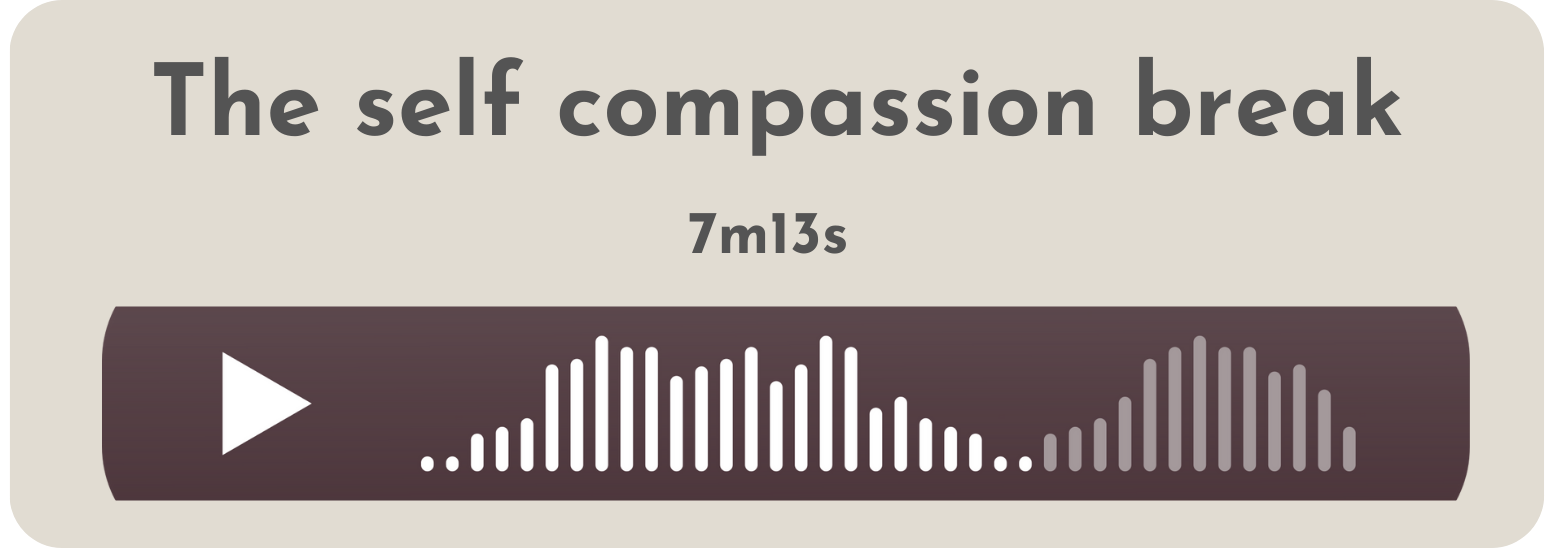
Here are the three stages, and an audio practice to guide you through them.
Step 1: Acknowledge what is happening
First, gently name your experience. This helps bring the prefrontal cortex (thinking part of the brain) online and begins to shift you out of automatic survival mode.
You might say internally:
- “Something in me feels very activated right now.”
- “A younger part of me is here.”
- “This is a lot for my body.”
As you do this, add a simple somatic cue. Feel your feet on the floor. Let your eyes slowly scan the room. Notice the contact of your body with the chair. These small actions signal to your nervous system that you are here, now, in the present environment.
Step 2: Remember common humanity
Next, gently remind yourself that you are not the only one who feels this way. Shame likes to convince us that we are uniquely broken. In reality, many people feel younger and more sensitised around family.
You might try:
- “Many nervous systems struggle at Christmas.”
- “A lot of people feel small around their families.”
- “I am not alone in this experience.”
Research on attachment shows that it is often the lack of attuned support that deepens pain, not just the original event (Siegel, 2012). Offering yourself this recognition now is a way of bringing in some of that support internally.
Step 3: Offer yourself kindness through touch and words
Finally, bring in a gesture of kindness. You might place a hand on your chest or belly, rest a hand on the back of your neck, or lightly hold your own hand in your lap. Choose something that feels as kind and non-intrusive as possible.
Then offer yourself a simple phrase, as if speaking to a younger you:
- “I am here with you.”
- “You are not doing anything wrong.”
- “It makes sense that you feel this way.”
- “We will go as gently as we can.”
This is not about forcing yourself to relax. It is about interrupting the habit of abandoning or attacking yourself when you are triggered. Over time, this kind of somatic self compassion can change how safe your younger parts feel inside your system (Neff and Germer, 2013).
Gentle questions to meet your younger parts
After a gathering, or even in a quiet moment during it, you might want to get to know the younger part of you that activated. This is where somatic parts work comes in. Rather than analysing endlessly, we get curious through sensation, image and felt sense (Schwartz, 1995; Fisher, 2017).
You could explore these questions in a journal, voice note or just in your own mind:
- “Which version of me felt most present today? The helper, the quiet one, the achiever, the joker, the fixer, the peacemaker?”
- “Where did I feel this part in my body? Chest, throat, stomach, jaw, shoulders?”
- “What were the sensations like? Tight, heavy, numb, buzzy, hot, collapsed?”
- “What did this part seem to be trying to protect me from? Conflict, shame, rejection, being left out, feeling wrong, feeling too much?”
- “Does this feel familiar from earlier in my life? If so, what ages or memories come to mind?”
If it feels safe enough, you might also invite a more adult, grounded part of you - what in IFS informed parts work is called the "Self" - to speak to this younger one:
- “Thank you for trying to protect me.”
- “You should not have had to carry this alone.”
- “I am here with you now, and I am listening.”
There is nothing to fix here. The aim is simply to build a kinder, more spacious relationship with the parts of you that work so hard during family time.

Simple regulation supports before, during and after family time
You do not have to navigate family dynamics purely by willpower. Small nervous system supports can make a meaningful difference, helping your body to feel safe and present in the here and now. You might like to explore:
Before a gathering:
- a few minutes of soft exhale breathing
- gently shaking through the legs and arms to discharge some activation
- placing a hand on your heart and setting a simple intention, such as “I will stay as close to myself as I can”
During a gathering:
- taking short breaks to orient, breathe and notice your body
- holding a comforting object in your pocket as a quiet anchor
- using the Somatic Self Compassion Break when you feel overwhelmed
After a gathering:
- moving your body in a way that feels supportive - walking, stretching, shaking or somatic yoga
- journalling for a few minutes about which parts were present and how they tried to protect you
- offering yourself a deliberate act or gesture of kindness.
How Somatic Self Healing can support you during the festive season
If you recognise yourself in these patterns, you are not alone. Many people arrive in Somatic Self Healing because family time stirs up younger parts, anxiety and shutdown that feel confusing or overwhelming.
Inside Somatic Self Healing we work with this gently and step by step by:
- Mapping your nervous system states so you can recognise fight, flight, freeze and fawn in your own body rather than pathologising them.
- Building somatic regulation tools that you can use before, during and after triggering situations.
- Processing stored survival energy in a titrated way, so that your system does not have to hold so much bracing underneath the surface (Levine, 2010).
- Developing a kinder relationship with younger and protective parts, using the somatic parts work practices in Modules 7 and 8 (Fisher, 2017; Schwartz, 1995).
The aim is not to create a “perfect” you who never gets triggered. The aim is to help you feel more resourced, more connected to your body and less alone with the parts of you that show up at Christmas and beyond.
Wrapping it up: befriending the parts that show up at Christmas
If you notice yourself slipping into old roles or younger feelings around family, it does not mean you have failed at healing. It means you are encountering nervous system patterns that were laid down a long time ago in environments that shaped you deeply.
Every time you notice a reaction, pause for a breath, place a hand on your body and offer yourself a kinder thought, you are doing something different. You are becoming the compassionate adult presence that may not always have been there for you.
Your younger parts are not in the way of your healing. They are telling the story of what you have lived through. With somatic awareness, regulation and self compassion, you can begin to sit beside them rather than inside them.
If you would like some support to carry this work through the rest of the season, you might want to revisit Part 1 of this Festive Survival Guide on nervous system physiology, and keep an eye out for Part 3 on somatic boundaries and festive overwhelm.

What’s coming next in the Festive Survival Guide
Over December, we are exploring three pillars of somatic support for the festive season:
- Part 1: Using your vagal brake when food, alcohol and routine changes impact your nervous system
- Part 2: Parts work and self compassion for when family dynamics activate old patterns
- Part 3: Somatic boundaries for managing festive overwhelm (coming soon)
Each part is designed to meet you where you are, with respect for your history and your nervous system. You can read them in order or pick the one that feels most supportive for you today.
Do family dynamics feel especially activating at Christmas?
Somatic Self Healing is a self-paced, trauma-informed programme that helps you gently repattern your nervous system, build safety in your body and meet younger parts with compassion, all year round.
Explore Somatic Self HealingReferences
Bradshaw, J. (1990) Homecoming: Reclaiming and Championing Your Inner Child. New York: Bantam Books.
Dana, D. (2018) The Polyvagal Theory in Therapy: Engaging the Rhythm of Regulation. New York: W. W. Norton.
Fisher, J. (2017) Healing the Fragmented Selves of Trauma Survivors: Overcoming Internal Self-Alienation. New York: Routledge.
Levine, P. A. (2010) In an Unspoken Voice: How the Body Releases Trauma and Restores Goodness. Berkeley, CA: North Atlantic Books.
Maté, G. (2003) When the Body Says No: The Cost of Hidden Stress. Toronto: Vintage Canada.
Neff, K. D. and Germer, C. K. (2013) ‘A pilot study and randomized controlled trial of the mindful self compassion program’, Journal of Clinical Psychology, 69(1), pp. 28–44.
Porges, S. W. (2011) The Polyvagal Theory: Neurophysiological Foundations of Emotions, Attachment, Communication, and Self-Regulation. New York: W. W. Norton.
Schwartz, R. C. (1995) Internal Family Systems Therapy. New York: Guilford Press.
Siegel, D. J. (2012) The Developing Mind: How Relationships and the Brain Interact to Shape Who We Are. 2nd edn. New York: Guilford Press.
van der Kolk, B. A. (2015) The Body Keeps the Score: Brain, Mind and Body in the Transformation of Trauma. New York: Viking.